A local business owner called me in because their website was not working. Not broken in an obvious way. It looked fine. But something was wrong, and they could not put their finger on what.
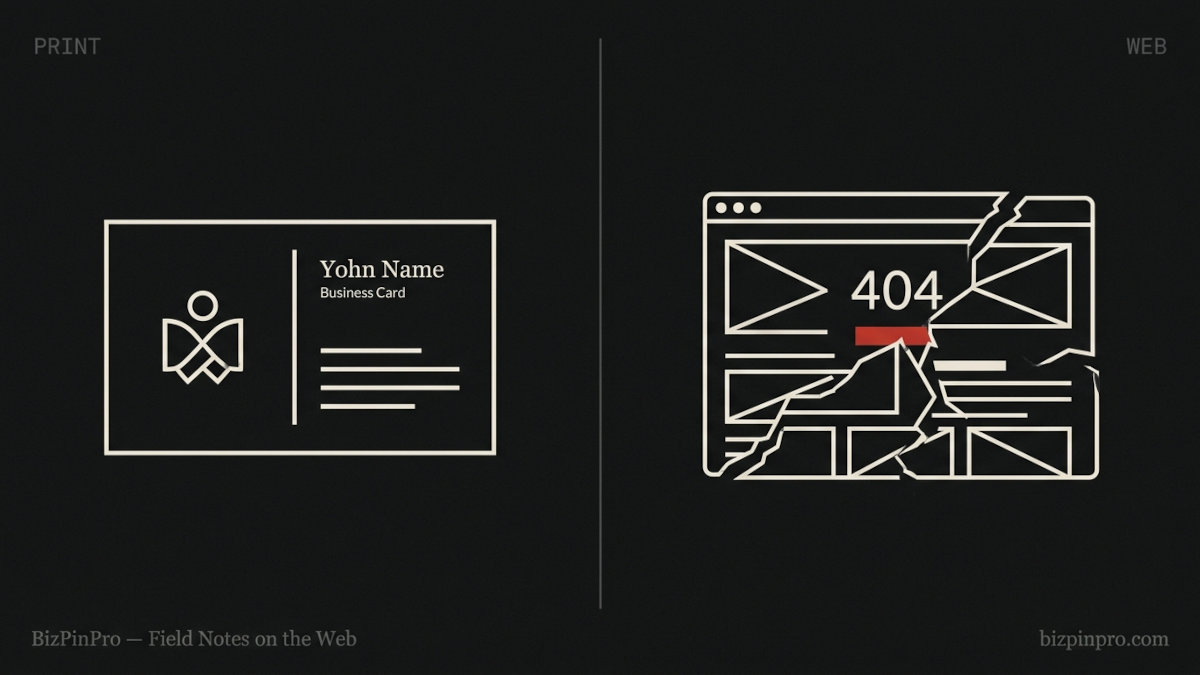
The person who built the site was the same person who had done their banners and their business cards for years. Good work, by all accounts. The business owner trusted that relationship and assumed it would carry over into a website.
It did not.
The Two Problems That Actually Matter
I ran a full audit and found several issues, but two of them are the ones that actually determine whether this site functions at all.
The site has a noindex tag active across the entire domain. In plain terms, this is an instruction telling every search engine not to include the site in search results. Not ranked poorly. Not buried on page five. Completely absent. It does not matter how good the design is, how accurate the content is, or how many services are listed, because none of it exists as far as Google is concerned. A customer searching for exactly what this business offers will never see this site in the results, full stop.
The second problem is structural. The site was built on Wix, a page builder platform. Page builders are marketed as an easy way to build a website without writing code, and that pitch is technically true. What it does not tell you is that ease of use comes at the cost of control. I do not build on page builders, not because I cannot use them, but because you cannot build a website properly inside one. The constraints of the platform become the constraints of your business. In this case, the site renders reasonably on desktop and breaks down on mobile, which for most small businesses today is the majority of their actual traffic.
A noindex tag means nobody finds you.
A broken mobile experience means the people who do find you anyway cannot use what they found.
Why This Happened
The person who built this site is skilled. Their print work, banners, business cards, signage, is genuinely good. That skill is real and it matters for a business's overall presentation.
It is also a completely different discipline from building a website. Graphic design is about visual composition on a fixed, static surface. Web development involves code, server configuration, search engine indexing, responsive behavior across different screen sizes, and dozens of technical decisions that have nothing to do with whether something looks good in a mockup. A person can be excellent at one and have no meaningful experience with the other. Being good at making things look right is not the same as understanding how things actually work.
This is not a criticism of the designer's talent. It is a fact about the shape of two very different skill sets that only look similar from the outside.
What Makes This Worse
The business owner did not walk into this eyes open, but it is an example of the Freebie Paradox. They were told they were getting a professional website. They trusted someone they already had a working relationship with. And on top of the technical problems, they were signed up for a full year of Wix hosting without being consulted about it first. The decision was made for them, and the bill came due regardless.
I first discussed the concept of the Freebie Paradox where the same noindex issue occurred - https://bizpinpro.com/inthefield/in-the-field-011-introducing-freebie-paradox/
Now they are in a position where fixing this properly means walking away from money they already spent under the assumption it was buying something functional. I pitched a full rebuild, because patching a page builder site with a domain wide noindex issue and a fundamentally broken responsive layout is not a real fix, it is a temporary patch on a structural problem. They understandably do not want to spend more money right after being told they already had a solution.
That is the actual cost of this kind of mistake. It is not just the technical debt sitting on the domain. It is the position it puts the business owner in afterward, caught between money already spent and money it would take to do it right.
What This Should Tell You
If someone is good at one part of your visual identity, that does not automatically qualify them for every part of it. A banner and a website solve completely different problems, use completely different tools, and require completely different expertise. Trusting the relationship is reasonable. Assuming the skill transfers is where this kind of situation begins.
A website that looks acceptable on the surface can still be functionally invisible to the exact customers it was built to attract. No amount of good design fixes a noindex tag. No amount of trust in the person who built it changes what the code is actually telling Google to do.
The Foundation Connection
A Digital Foundation requires the right expertise applied to the right problem. Design and development are both part of a business's digital presence, but they are not interchangeable skills, and treating them as if they are is how a business ends up with a site that looks fine and functions nowhere.
Ask what someone actually specializes in before handing them your website. A good eye and a working knowledge of search engines, code, and site architecture are not the same thing, and the businesses paying the price for that confusion rarely find out until it is already too late to undo cheaply.


