I already wrote about the fact that web development has no licensing board, no certification, no gatekeeping of any kind. Anyone can call themselves a developer on a Tuesday. AI didn't create that problem. It just removed the last bit of friction that used to slow it down.
Before AI, building something that looked professional took real time, even for someone with no real skill. You had to learn a tool, fumble through a template, spend hours getting something to look right. That friction accidentally filtered some people out. Not because it required expertise, but because it required patience most people didn't have for something outside their field.
AI removed the friction without adding the expertise. Now someone with zero background can describe what they want and get something that looks finished in an afternoon. The output looks like it was built by someone who knew what they were doing. Whether it actually was is a completely different question, and the person who built it usually has no way to answer it.
What I Use AI For
I use AI constantly. It's a thinking partner. I use it to pressure-test an argument before I publish it, to catch a gap in reasoning, to move faster on something I already know how to evaluate when it's done. Every glossary entry, every field note, gets reviewed by me against standards I already understand, because I know what right looks like before I ever ask AI to help me get there faster.
That's the entire difference. I'm not using AI to replace judgment I don't have. I'm using it to apply judgment I already have more efficiently.
Why This Matters More With A Website Than Almost Anything Else
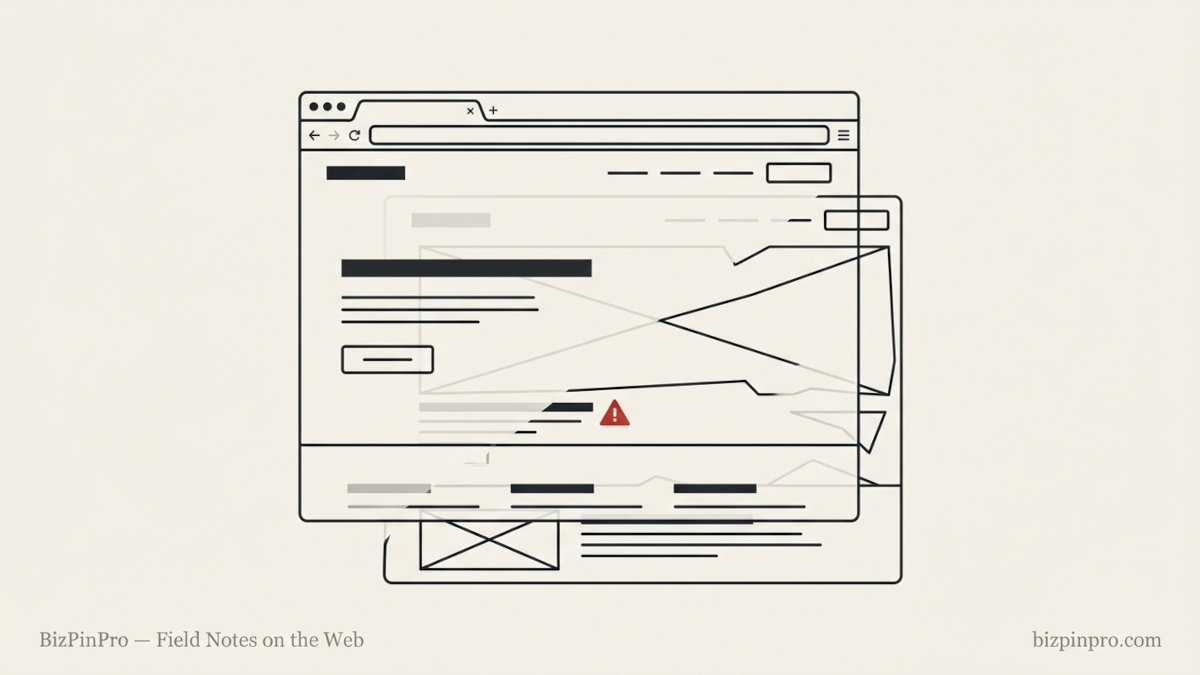
I see this constantly now. Someone built their own website, often with AI doing most of the actual work, and it looks genuinely good. Clean design, nice colors, professional looking layout. Then I look at the code underneath it, and it's a mess. No schema. Broken heading structure. Security holes. Accessibility failures. None of the actual standards that determine whether the site functions the way it's supposed to.
The person who built it has no way to know any of that, because they don't know what to look for. They asked for something that looks professional, and they got exactly that. Looking professional and being built correctly are not the same thing, and there's no way to tell the difference by looking at it, which is exactly why the difference matters so much.
The Argument You Can't Have
This is the part that's genuinely hard. When I try to explain any of this to someone who built their own site this way, I'm arguing against something they can't see and don't have the background to evaluate. They're not being stubborn. They're looking at their own homepage, which looks fine to them, and I'm telling them something is structurally wrong underneath it that they have no way to verify themselves without trusting me completely.
They usually don't. Why would they? Their site looks good. It's live. People have complimented it. From where they're standing, "good enough" isn't a compromise, it's just true, because they have no other measurement available to them.
That's not a failure of intelligence. It's the exact same problem I've written about with directory badges and self-submitted awards. When you don't know what the real standard is, whatever you're looking at becomes the standard by default, because nothing is forcing a comparison to anything else.
Why Standards Have To Come From Outside The Process
This is the part AI can't fix, and honestly can't be expected to. A non-developer doesn't know enough to write the standards they'd need to check their own AI-built site against. They don't know that a missing meta description matters, or that a page needs exactly one H1, or that accessibility isn't a checkbox, because nobody ever taught them what those things are for in the first place. Asking someone to evaluate work they don't have the background to evaluate isn't a fair ask, and it's not their fault they can't do it.
That's why I publish my own build standards publicly rather than just telling people to trust me. Not because a list of technical requirements is exciting reading, but because it gives someone outside my head a way to check my work against something specific, instead of just taking my word for it the same way they'd take anyone else's.
What This Actually Means
AI is a legitimate, powerful tool. It is also not a substitute for knowing what you're looking at. A developer using AI is applying judgment they already had, faster. A non-developer using AI is often building something they have no way to evaluate, dressed up well enough that the absence of that evaluation is invisible, including to the person who built it.
The tool didn't lower the bar.
It just made it a lot easier to clear the appearance of the bar without ever actually reaching it.


