The business ranking above you might not even exist.
Not exist as in gone out of business.
Not exist as in never had a physical location, never had a crew, sometimes never had a single real employee behind the name at all.
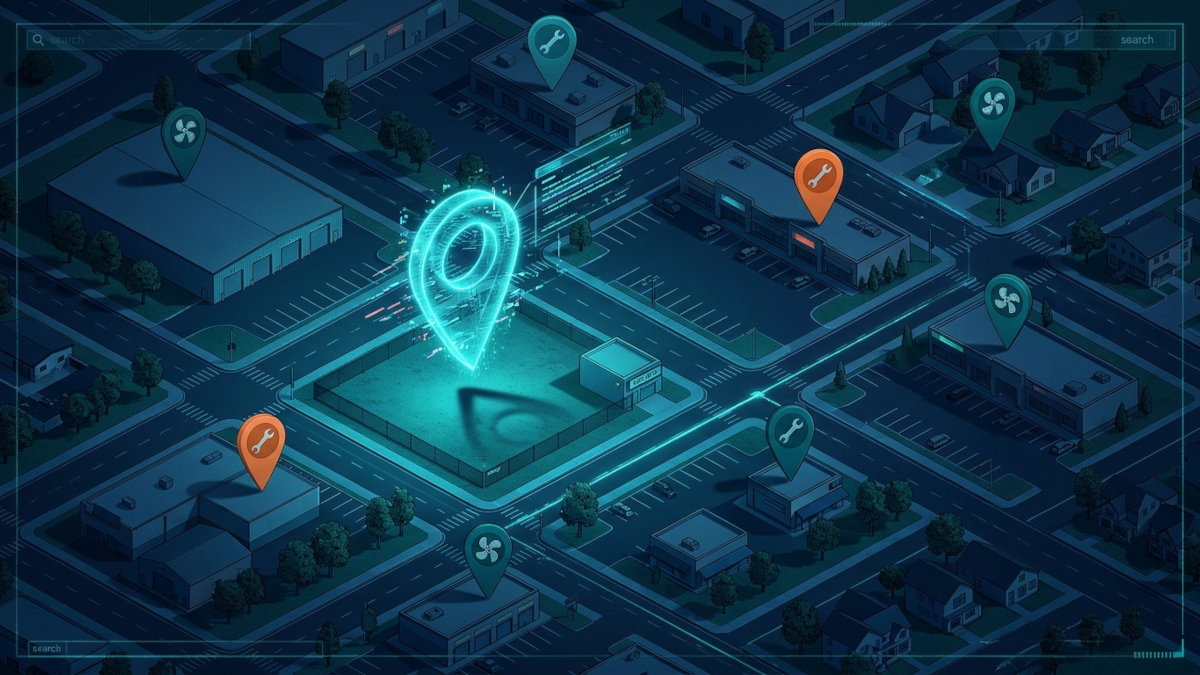
And it's sitting in the map pack ahead of you, taking calls that should have been yours.
How A Ghost Listing Gets Built
The simplest version is a completely fabricated Google Business Profile. Someone creates a listing for a business that doesn't operate, picks a service category with high call volume, plumbing, HVAC, garage door repair, locksmiths, and sets the address to a virtual office, a UPS box, or sometimes just a residential address with no real business at it. Google's verification process has gotten better over the years, but it is still possible to get a listing live, especially in a category with enough demand that a few fake entries slip through before anyone flags them. You also may be contending with a listing that is older before Google's crackdown on this practice.
The listing looks completely normal to a customer. A name, a phone number, reviews, sometimes photos pulled from stock image sites or scraped from a real company's site somewhere else in the country. Nothing about it visibly signals that it isn't real.
A more sophisticated version doesn't fabricate the business entirely. It's a real call center or lead aggregation operation running under a name that sounds like a local company. The phone number connects to a dispatcher, not a technician. When you call, someone answers professionally, takes your information, and tells you a technician will call you back shortly. What happens is your information gets sold to whichever real, local contractor is paying that lead service for calls that week, sometimes to several contractors at once, and now you're getting called by three different companies who all think they're the one who's supposed to help you.
Why This Works So Well In Service Industries
Emergency and urgent home service categories are the most common targets, because the customer is in a hurry and not thinking critically. Someone whose water heater just failed isn't scrutinizing a Google Business Profile's history or checking whether the listed address corresponds to a real building. They're calling the first result that looks legitimate and has decent reviews.
That urgency is exactly what makes the fraud sustainable. By the time a customer realizes something was off, maybe the technician who showed up wasn't who they thought they called, maybe the price was inflated because a middleman took a cut, they've already had the interaction and moved on. Few people go back and report a fake Google listing after the fact. They just remember having a bad experience and don't necessarily connect it to the listing itself being the source of the problem.
Why It's Hard To Spot From The Outside
A ghost listing often has real reviews, because review manipulation and fake business creation tend to travel together. Reviews can be purchased, generated by bots, or left by people who never received the service, describing a positive experience with a business that may not have a real crew behind it at all.
Photos get scraped or stock-sourced convincingly enough that a casual glance doesn't raise suspicion. The phone number works, someone answers, the whole interaction feels normal from the customer's side, right up until they realize the work wasn't done by who they thought they called, or that the service they received doesn't match what a five-star review history would suggest.
What This Costs The Real Business
If you run a legitimate local service business and a ghost listing is ranking above you, the cost isn't abstract. Every call that goes to the fake listing first is a call you never got the chance to answer. Some of those calls eventually get resold to you anyway through a lead service, meaning you're now paying for a customer who was never looking for a lead broker in the first place, they were looking for a real local business and got routed through a middleman who's now charging you to reach them.
It also damages trust in the category as a whole. A customer who gets burned by a ghost listing doesn't necessarily conclude that one specific listing was fake. Sometimes they conclude that hiring anyone found through a Google search in this category is risky, which makes the next real, honest business's job harder too.
How To Check If You're Looking At A Ghost Listing
- Call the number and ask specific, local questions. A real local business can usually answer things like which neighborhoods they serve regularly, or reference a specific detail about the area that a call center answering for dozens of markets typically can't.
- Check whether the listed address corresponds to a real building you can find on a map, versus a UPS store, a shared virtual office building, or an address that doesn't match the category of business at all.
- Look at the review pattern. A cluster of five-star reviews all posted within a short window, written in similar language, with reviewer profiles that have only ever reviewed this one business, is a pattern worth noticing.
- Search the business name directly rather than relying on the map pack. A real, established local business usually has some presence beyond just its Google listing, a real website, mentions elsewhere, a consistent history. A ghost listing often has nothing behind it except the listing itself.
The Foundation Connection
Local Authority of a solid Digital Foundation depends on search engines and customers alike being able to trust that a listing represents a real, operating business at a real location. Ghost listings exploit the fact that Google Business Profile verification, while improving, still isn't airtight, and that customers in an urgent situation rarely have time to verify what they're calling.
For a legitimate local business, the defense isn't complicated, it's consistency. A verified, active, accurately maintained profile, real reviews earned over time, a website that reinforces the same information everywhere it appears. None of that stops a ghost listing from existing.
It does make the difference visible to anyone who takes even a moment to look closely, and it means your business isn't the one vulnerable to the same accusation if someone ever checks.