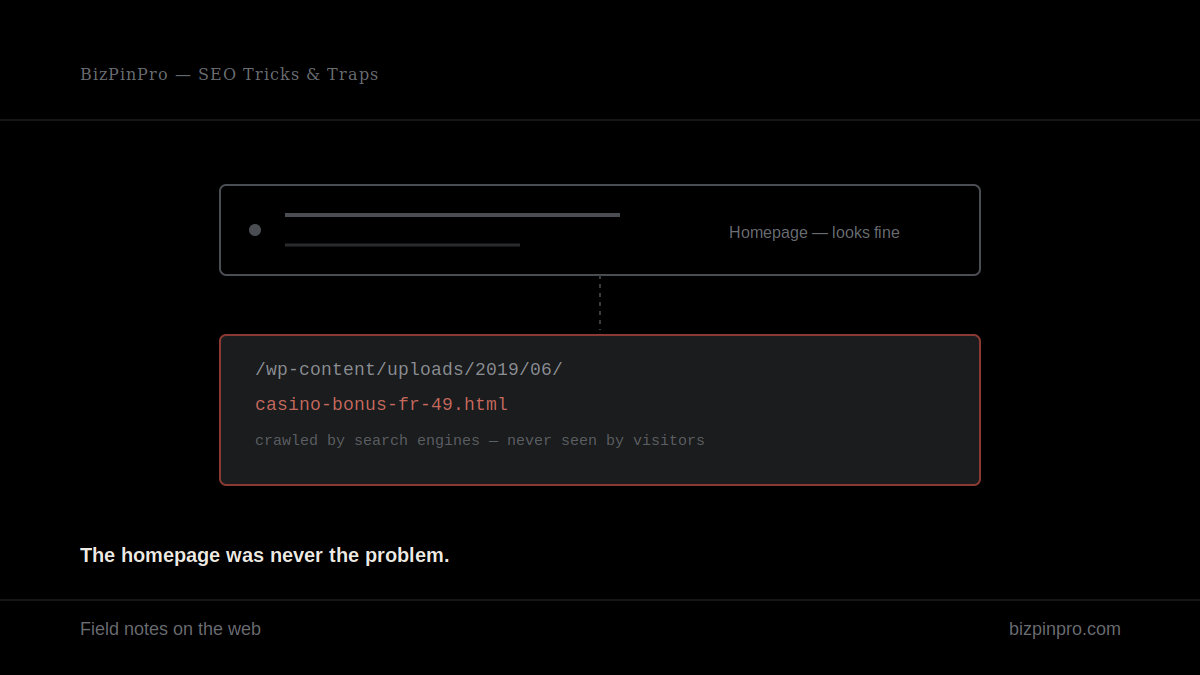
They look like real websites. A local news blog. A hobby site about home renovation. A small business directory. Each one has posts, categories, an about page, maybe even a contact form. Nothing about any single one of them looks suspicious.
Then you notice the pattern.
What A PBN Actually Is
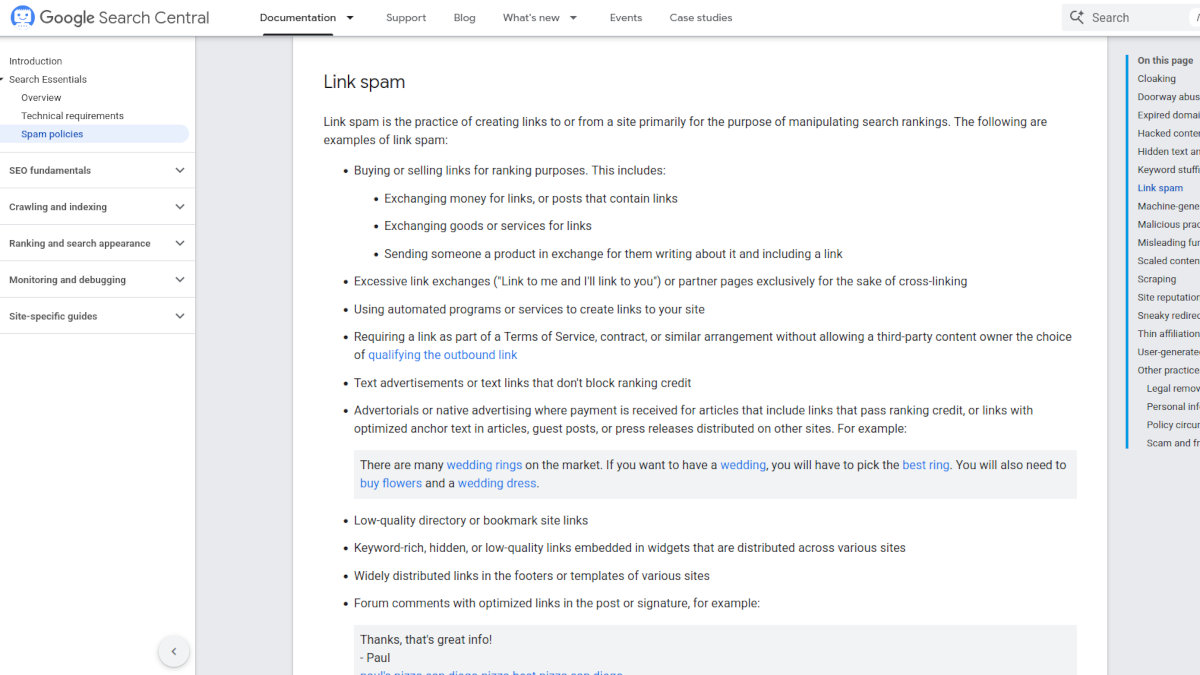
A Private Blog Network is a cluster of websites built to look independent while actually being owned and controlled by the same person or company. Their real purpose has nothing to do with the content on the page. They exist to link back to one target site, called the money site, and pass search authority to it. Every blog post, every article, every page in the network is scaffolding built around a handful of links pointing in the same direction.
This is not new. PBNs have existed for as long as Google has ranked pages by counting who links to whom. What changed is how well they hide.
Why Cloud PBNs Are Different
The old version of this trick, the traditional link farm, was easy to catch. A dozen sites all hosted on the same server, sharing the same IP address, sometimes even the same WordPress theme. Google eventually learned to recognize that fingerprint and penalize the whole network at once.
The modern version spreads itself out deliberately. Each site in a cloud PBN sits on a different hosting provider, a different IP range, sometimes a different country entirely. One site might run on a server in Virginia, another in Germany, another on a completely different cloud platform. Nothing technically connects them from the outside. No shared server. No shared IP block. No obvious fingerprint tying them together.
That is the entire point of the word cloud in cloud PBN. It is not about the content or the strategy. It is about distributing the infrastructure specifically to make the network harder to detect.
Why This Is Easier Than It Sounds
None of this requires sophistication anymore. A network of unique looking sites, each with genuinely different content, each calling back to a private central system that Google never sees, checking for new target businesses and generating fresh blog posts and links automatically. Unique content, unique domains, unique hosting, all of it orchestrated invisibly from one place a search engine has no way to find.
That is not a hypothetical far off scenario. That is well within reach of anyone who understands how to connect a few systems together. The barrier to building something like this is not technical skill anymore. It is willingness.
Which is exactly why relying on detection as your only defense is a bad bet. If it is this easy to build, it is being built. The question is not whether schemes like this exist. It is how long any individual network survives before an algorithm update catches up to it.
Why It Works, For Now
It works because building and maintaining a cloud PBN like this takes real effort and real money. Multiple hosting accounts. Multiple registrations. Content that has to look plausible enough not to raise suspicion on its own. That effort is exactly what makes it harder for Google to catch at scale. There are a lot of operators doing this well enough that detection genuinely lags behind.
A well built cloud PBN, properly masked, spread across enough infrastructure, can sit undetected for a long time. That is a fact, not a recommendation.
Why It Is Not A Strategy You Should Count On
Every advantage built on hiding from Google has the same expiration date problem. It works until Google's detection improves, and Google's detection has been improving for two decades straight. Algorithm updates specifically targeting link manipulation happen regularly, and when one lands on a network that was hiding successfully, the damage is not gradual. It is immediate and it hits every site the network was propping up at once.
The business relying on that network does not get a warning. They get a sudden, unexplained collapse in rankings with no clear cause visible from the outside, because the actual cause was a network of sites they may not have even known existed, built by someone they hired to get results fast.
These systems are getting easier to build. They're getting harder to distinguish from legitimate sites. They're proliferating. And businesses are being sold the resulting links as if they represent earned authority.
Whether Google eventually wins that arms race is almost beside the point for the business owner.
Because if you're the business owner paying for those links, you're making a bet on an arms race you don't control and probably don't even know is happening.
What This Means For You
If someone offers you fast ranking improvements through a network of backlinks they control, ask direct questions. Where do those links come from. What do those sites actually look like. Are they real, independently operated sites that chose to link to you because your content earned it, or are they part of something built specifically to manipulate rankings.
You will not always get an honest answer. But the businesses that end up damaged by a PBN collapse are rarely the ones who built the network. They are the ones who paid someone else to build it for them and never asked what was actually happening underneath the results.
Real backlinks come from real relevance. A site links to you because your content is genuinely useful to their audience. That kind of link cannot be masked or hidden because it does not need to be. It exists because it is real.
A cloud PBN exists because the alternative, earning links honestly, takes longer and is harder. That tradeoff might work today. It is not something to build a business on.
---
Sources - Spam Policies for Google Web Search - Archive